
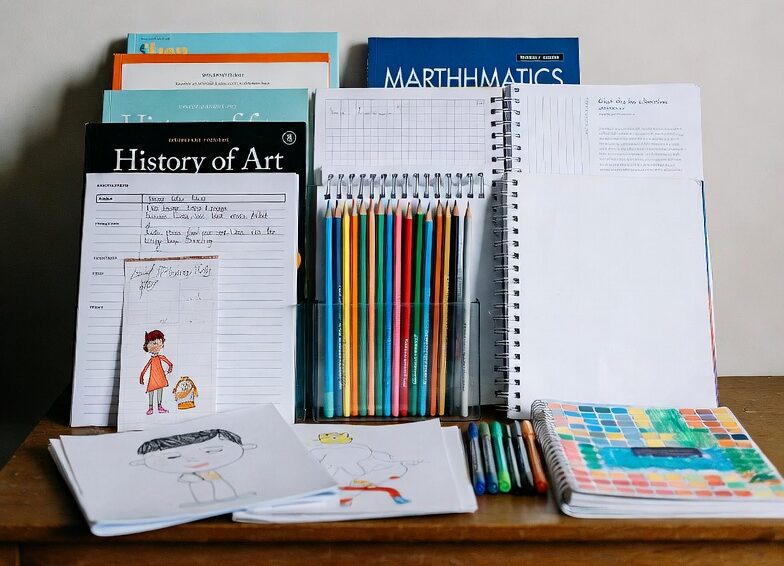
If you homeschool, chances are at some point you’ll need to put together a portfolio. Whether it’s for your state’s annual review, a college application, or simply your own recordkeeping, a homeschool portfolio tells the story of your child’s learning journey. But what exactly goes into one? Here’s a simple breakdown to help you build a complete, meaningful, and beautiful portfolio.
What a Homeschool Portfolio Is
Think of a homeschool portfolio as both a scrapbook and a transcript—it’s a collection of materials that show what your child learned over a specific school year. It should offer an overview of academics, showcase growth, and highlight individuality. The goal isn’t perfection—it’s an authentic picture of learning in progress.
The Core Components
You can tailor your portfolio to your homeschool style, but most include these key sections:
- Cover Page and Overview: Include your child’s name, grade level, school year, and your homeschool name (if you have one). A short introduction summarizing your approach to learning sets the tone.
- Attendance Record: A simple log or calendar marking school days or hours helps demonstrate compliance with state laws.
- Curriculum List or Learning Plan: List the textbooks, online resources, unit studies, and hands-on projects you used.
- Samples of Work: Include a few examples from each core subject—language arts, math, science, and social studies. Choose pieces that show progress over time (early-year versus later work).
- Reading List: Record books your child read independently or as read-alouds. Add comments or star favorites for a personal touch.
- Progress Evaluations: Report cards, test results, or written summaries of growth in each subject. For younger students, you can use simple narrative notes instead of grades.
- Projects and Activities: Photos, art samples, science experiments, or creative writing pieces bring your portfolio to life.
- Extracurriculars and Field Trips: Include records of clubs, sports, volunteer work, or trips to museums and parks—these show the well-rounded nature of your program.
Optional but Valuable Additions
A few optional sections can make portfolios stand out:
- Goals and Reflections: Short notes about what your child aimed to learn—and reflections on what they accomplished or enjoyed most.
- Certificates and Awards: Copies of certificates from classes, camps, or programs help highlight achievements.
- Assessment Summaries: If you work with an evaluator or co-op, include summaries or feedback reports.
How to Organize It
You can assemble a physical binder with divider tabs or create a digital version using PDFs and cloud folders. Label sections clearly and date your materials. Keep it clean, simple, and chronological—the easier it is to navigate, the better impression it makes.
A Living Record of Learning
A homeschool portfolio isn’t just about meeting legal requirements—it’s a keepsake of your child’s growth and creativity. Over time, these portfolios turn into a cherished archive of your homeschool years, full of memories, milestones, and proud moments.