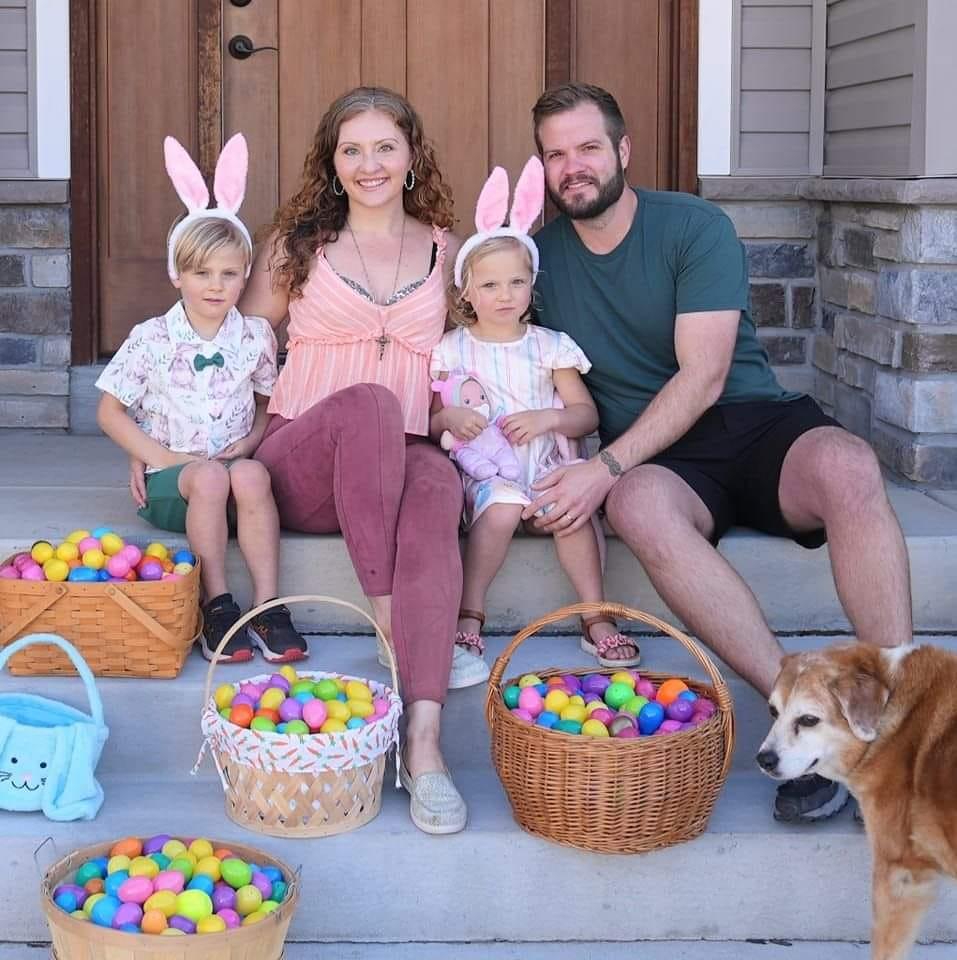
It's a Tuesday, two weeks after you pulled her out of school, and your daughter is on the couch with a stuffed animal she hasn't touched in three years. It's 10 a.m. Nothing is open on the table. No worksheet, no schedule, no lesson. You feel the panic rising because nothing is happening, and you are now the one responsible for whether anything happens at all.
Here is the reassuring part, and I mean it: everything that needs to happen right now is happening. She's decompressing. This is deschooling, and it isn't wasted time. It's the first chapter.
The formula nobody told you
The single most useful thing to know about deschooling is how long it takes, and the honest answer is longer than you think. The heuristic that's circulated in homeschooling circles for decades, popularized through Sandra Dodd's community and writers like her, is roughly one month of deschooling for every year your child spent in school.
A first grader who did one year plus kindergarten needs a month or two. A sixth-grader who spent seven years in the system needs closer to six. This isn't a stopwatch, and plenty of families need more or less, but it's the right order of magnitude, and it's why "the first 30 days" is the wrong frame for almost everyone. Thirty days is the floor, not the rule.
The deeper roots run to John Holt, whose books How Children Learn and Teach Your Own are foundational to unschooling thought, and to Ivan Illich, who coined "deschooling" in the first place. You don't need to read either to do this. You just need to stop counting in weeks and start counting in years of schooling undone.
What deschooling is, and what it is not
Deschooling is the deliberate decompression period between leaving school and starting formal homeschooling. That's it. Three things it is not:
It is not unschooling. Unschooling is a long-term philosophy in which the child directs their learning indefinitely. Deschooling is a temporary phase you pass through on the way to whatever method you've chosen, including a structured one.
It is not permanent. You will start the curriculum. Just not yet.
It is not 30 days regardless of age. See above. The kid who's been performing for grades since kindergarten needs more time than the one who has barely started.
Why it matters
Kids coming out of a classroom carry habits that quietly work against learning at home. They wait to be told what to do. They perform for a grade rather than out of curiosity. They fear the wrong answer enough to stop guessing. They've learned that "learning" means a worksheet, a unit, a test, and that anything else is play and therefore doesn't count.
None of those habits loosened because you bought a new curriculum. They loosen because, for a stretch of weeks, nothing is demanded of them in that old shape, and the nervous system finally believes it. Deschooling is how the school comes out of the kid. Skip it, and you spend your first homeschool year fighting the residue.
What each timeline actually looks like
One to two months (first- and second-graders). The lightest version. Mostly play, daily read-alouds, library trips, and a lot of outside time. The main event is that your child rediscovers boredom and slowly learns that you aren't going to fix it for them. That's the work.
Three to four months (third through fifth graders). Everything above, plus genuine emotional decompression. You may see what looks like regression: a nine-year-old playing with toys that feel too young, sleeping more, getting weepy over small things. This is the pressure leaving. Hold steady.
Six or more months (middle school and up). The longest and usually the hardest. An older kid moves in phases: first resistance ("Are we doing school yet?"), then a flat, almost worrying disengagement, and finally, if you don't panic and re-impose worksheets, a slow re-emergence of curiosity on their own terms. The parents' whole job here is to hold the line and not mistake the quiet middle for failure.
What to actually do
During deschooling, you do less than you feel responsible for, on purpose. The practical list:
Read aloud, a lot, above and below grade level, both.
Go outside a lot. Walks, parks, the backyard, weather permitting, and not.
Let them be bored without rescuing them. Boredom is where self-directed interest is born.
Watch documentaries together and talk about them.
Cook together. Measuring, reading, sequencing, all of it counts.
Take field trips and visit the library every week.
Talk. In the car, at dinner, over dishes.
What you do not do is start a curriculum. The resources guide on how to deschool a child walks through the same posture in more detail, but the one-line version is: fill the days with living and reading, and leave the textbooks in the box.
The parents' deschooling is the hard part
Here's what the lists undersell: you have to deschool, too, and it's harder than the kids' version. You spent your own childhood inside the same system, and your gut tells you a real school day has a start bell, graded work, and visible output by lunch. You have to unlearn "this should look like school" before you can lead a home that doesn't.
The biggest danger is the comparison trap. You'll measure your couch-and-stuffed-animal Tuesday against the mental image of your daughter's old classroom, and you'll feel like you're failing her. You're not. You're just early. Trust grows as you watch the decompression actually work, and it will, but you have to give it the weeks first.
What kids do that worries parents (and shouldn't)
A short list of behaviors that look like alarms and are actually the system rebalancing: sleeping a lot, especially at first, as a chronically under-rested kid finally catches up. Playing with toys that seem too young. Reaching for books well below their reading level. Asking the same question fourteen times. Flatly refusing to "do school." None of these is a regression to worry about. They're what recovery looks like from the outside.
When to start the curriculum
You'll know the phase is ending by a few quiet signs. Your child starts asking questions out of curiosity rather than to give you the answer they think you want. They pick up a book without being told to. They can sit through a read-aloud without asking how much longer it will be. When you see those, the nervous system has reset, and you can begin to build a rhythm. The morning basket is a gentle on-ramp, and the broader "how to homeschool" and "how to start homeschooling" guides cover what comes next.
You're already homeschooling (the compliance part)
One worry I want to defuse directly. If you pulled mid-year, you've already filed your notice of intent and you are, legally, homeschooling right now. Deschooling does not mean you've stopped. You're still meeting your state's attendance and instruction expectations, and the read-alouds, library trips, documentaries, and cooking are real educational activities that count.
So log them. In HomeschoolFox, record each one as an activity with a title, duration, and who attended, and tag the subject as core where applicable, so the minutes flow into your state hour requirements automatically. Check what your state actually expects on the state requirements page, and keep a light paper trail with the recordkeeping guide. Deschooling on the books looks like a real homeschool, because it is one.
The instinct is to treat deschooling as the boring prologue you have to get through before the real homeschool starts. Flip it. The deschool isn't the prologue to your homeschool. It is the first chapter.