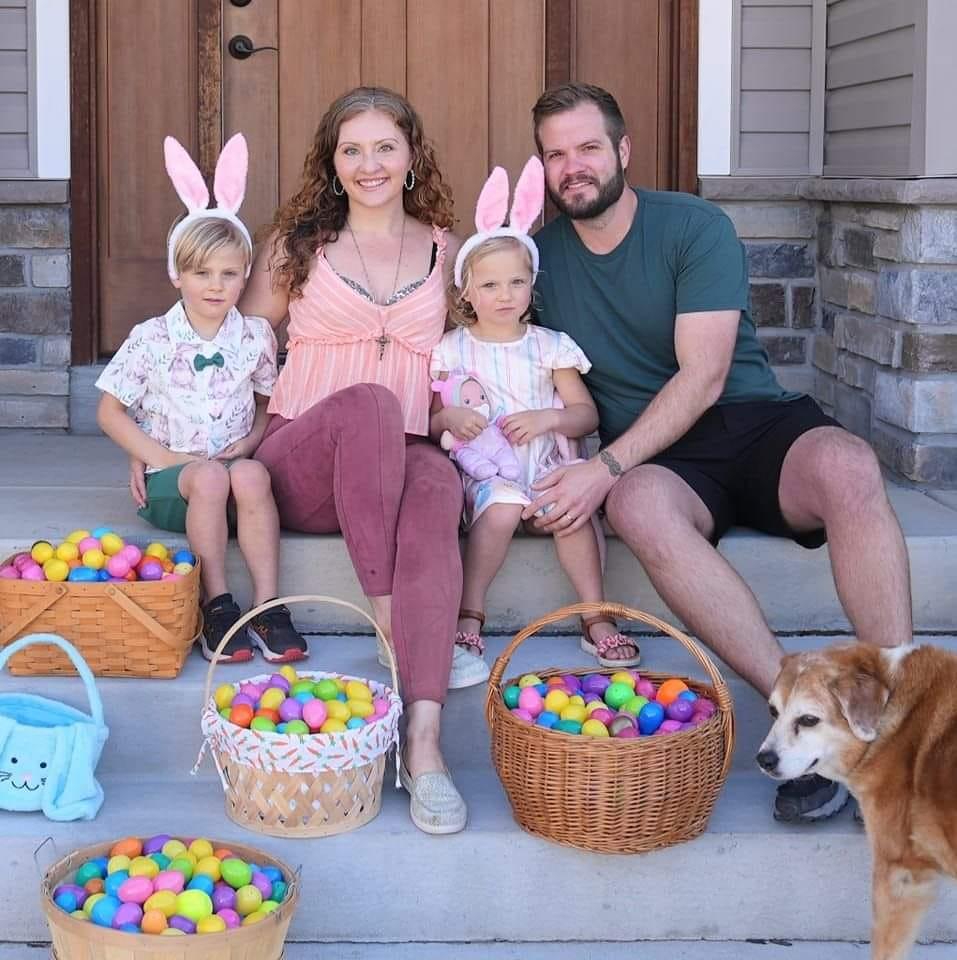
The signal that read-aloud time has started in our house is not me announcing it. It is the room going quiet on its own. The nine-year-old stops narrating his LEGO build, the teenager drifts in and pretends she is only passing through, and the six-year-old folds into the corner of the couch under a blanket. I open the book to the ribbon, find my place, and start reading. Nobody is being quizzed, nobody has to sit a certain way, and for the next half hour, the five of us are inside the same story at the same time. No other part of our school day pulls them all in like that.
Why reading aloud carries more weight at home
In a classroom, reading aloud is one activity among thirty kids and seven periods. At home, it does something a school cannot: it gives a whole family one shared text. My children, spread across six years of age, end up with the same vocabulary, the same characters to argue about at dinner, and the same emotional reference points. When the youngest finally understands a joke the oldest made two years ago about a book we read, that is the shared culture doing its quiet work.
The case for it is old and well-supported. Jim Trelease built The Read-Aloud Handbook around it decades ago, and the American Academy of Pediatrics has, since a 2014 policy statement, urged parents to read aloud every day starting in infancy. The research backs it up. What keeps the book open in our house is simpler than any study: reading aloud does something to the family that no worksheet does.
It also solves a problem unique to teaching several ages at once. A read-aloud is the rare lesson that serves a six-year-old and a fourteen-year-old in the same half hour, which is why it anchors so many multi-age homeschool days. The little ones reach up, the older ones get to revisit a story without embarrassment, and everyone is doing one thing together rather than five things apart. For an introverted child, it is a way into a shared imagination with siblings that asks nothing of them; they do not have to perform, only listen. There is no real equivalent in a graded classroom, where a fourteen-year-old and a six-year-old never share a lesson, let alone a story. Plenty of the connections parents hope socialization will build happen right there on the couch.
What we read
I am not going to hand you a curated master list; Sarah Mackenzie's Read-Aloud Revival already does that better than I could, and her booklists are where I send people who want depth. What I can give you is what has worked in one family.
Picture books never leave the rotation, even with a teenager in the room; a good one is a short film you read in eight minutes. We reread the favorites without apology, because a book the youngest has heard four times is a book the oldest can now hear differently. For early readers, we lean on Mercy Watson, Frog and Toad, and My Father's Dragon. The middle-elementary stretch is the sweet spot: The Penderwicks, The Wingfeather Saga, The Green Ember, and Anne of Green Gables. As they get older, we move into the Mysterious Benedict Society, Narnia, Tolkien, and biographies, and by the high school years, the read-aloud becomes the way we get through Shakespeare, Dickens, and Steinbeck together, which is far less lonely than assigning them. The Bible is part of our rotation too, read as one of our family's texts rather than a lesson; some families weave in a devotional, others keep it story-only, and the habit works either way. The only real rule is that it fits how your family homeschools.
The mechanics that make it stick
The families who keep reading aloud are not more disciplined; they have attached it to something that already happens. Mealtimes are the easiest anchor, because everyone is already seated and quiet. We read at breakfast some seasons, at lunch others, on the couch after dinner when the year is busy. Twenty to thirty minutes is plenty. Hands stay busy if they need to: my listeners draw, build LEGO, or fold laundry, and the listening does not suffer for it. There is no quiz at the end, no comprehension check, no worksheet. The point is the story, and the only proof you need that it landed is that they ask for the next chapter. If you are starting from nothing, do not aim for thirty minutes on day one. Read one picture book tomorrow, attach it to a meal, and let the habit earn its place before you grow it; consistency at ten minutes beats ambition at forty that lasts a week.
What kills it
Three things end a read-aloud habit, and all of them come from trying too hard. The first is performance pressure, the parent who thinks they have to do the voices and dreads the next session because of it; read it plainly and the kids will not care. The second is the comprehension-question trap, turning a story into a test the moment it ends, which teaches children to brace instead of listen. The third is the quiet killer: picking a book you do not enjoy. If you are bored, your kids hear it in your voice within a page, and the whole thing curdles into a chore. Abandon a book you both dislike without guilt and pick a better one.
Making it count as language arts
Here is the part most reading-aloud advice skips. In most states, time spent reading aloud counts as language arts, literature, or English, the same as a textbook lesson would. That matters when your state asks you to document a certain number of hours a year, because the half-hour you already love is also instructional time you can claim. The arithmetic is friendlier than it looks: thirty minutes a day across a typical thirty-six-week year is roughly ninety hours, a real share of a year's English requirement, built entirely from a habit you were keeping anyway.
In HomeschoolFox, you log a read-aloud just like anything else. Create an activity called Read-Aloud or Literature, tag it to the subject, note the book and the minutes, and the time flows into each listening child's annual totals. Do it for two minutes after you close the book, and a year of reading turns into a documented language-arts record without a separate spreadsheet. The hours calculator shows how quickly thirty minutes a day adds up across a school year, and it stays part of the broader record keeping you would want anyway if a district or a college ever asks what your child studied.
The long view
Children who are read to not only become stronger readers, but they also become that. They become adults who can sit with a long argument without reaching for a phone, who carry a set of shared family references that the rest of us only get from television, who know from the inside what it feels like to be carried into another person's life through a page. None of that shows up on a third-grade test. It shows up at twenty, in who they turn out to be.
So if the day falls apart, if the math goes badly and the science never happens, and everyone is short with each other by noon, there is still one move that rescues it. It costs nothing, requires no preparation, and repairs a hard day better than starting the day over would. If only one thing happens today, read aloud.