

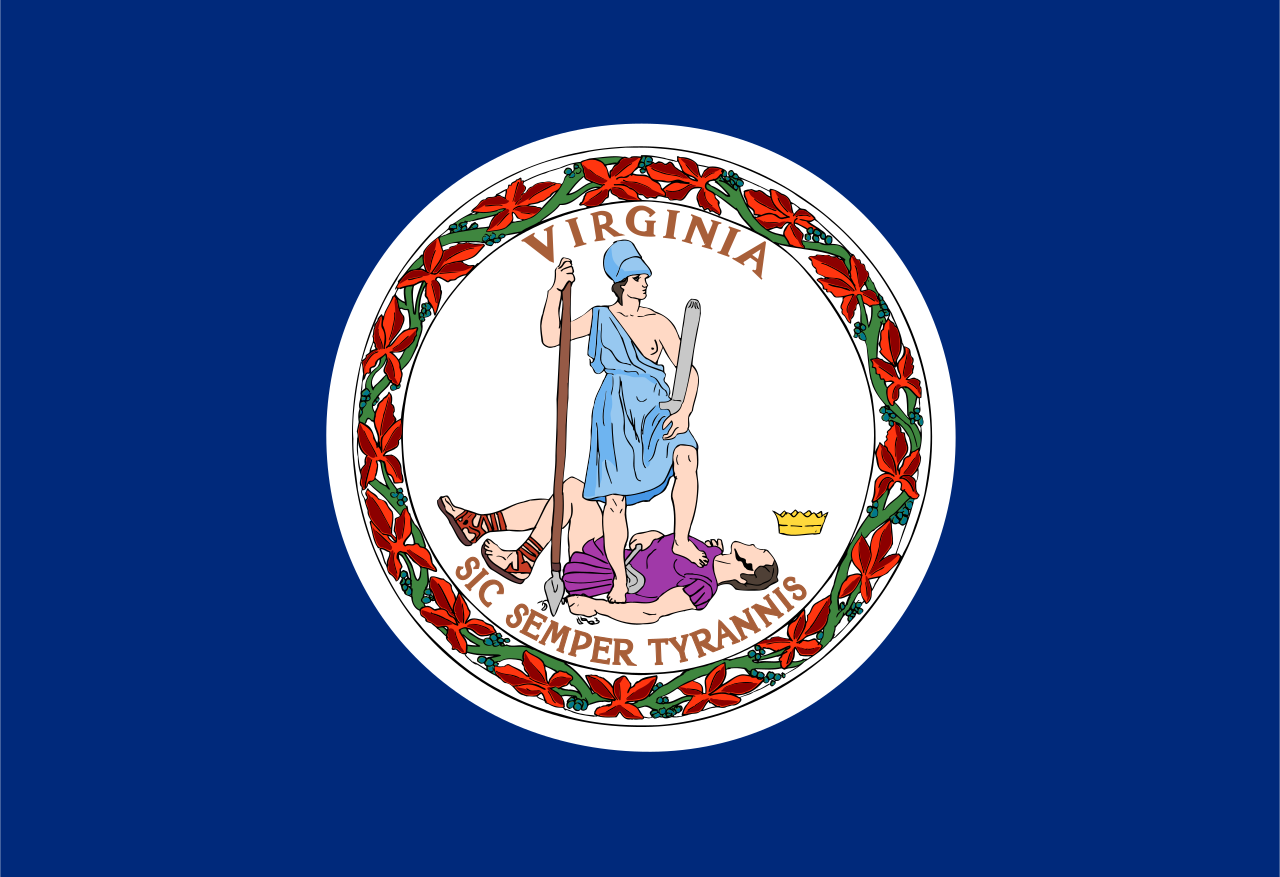
Two states, side by side
North Carolina vs Virginia: Homeschool Laws Compared
Nine rules compared from each state's verified compliance data, then what changes for a family moving in either direction.
Start tracking freeThe short answer
North Carolina and Virginia sit in the same tier: both require notice and a periodic assessment. They still differ on 4 of the 9 rules compared: notice of intent, testing or evaluation, compulsory school ages, and ESA funding.
- Rules compared
- 9
- Differences
- 4
- Same in both
- 5
The rules, side by side
Rows where the two states differ are marked. Tap a state name for its full guide, deadlines, and sources.
| Rule | North Carolina | Virginia |
|---|---|---|
| Notice of intent Differs | Required, filed with the state education department | Required, filed with the local school district |
| Hours or days per year | No minimum | No minimum |
| Required subjects | None named | None named |
| Testing or evaluation Differs | Standardized testing, annually | Parent's choice (testing, portfolio, or evaluation), annually |
| Portfolio of work | Not required | Not required |
| Progress reports | None | Once a year |
| Compulsory school ages Differs | 7-16 | 5-18 |
| ESA or school choice funding Differs | ESA+ (Education Student Accounts Plus) (up to $9,000) | No program |
| Public school sports access | District decides | Not yet verified |
Figures are the same verified compliance data shown on each state's page. Requirements change; confirm with your state before you rely on one.
Moving from North Carolina to Virginia
Once you are a Virginia resident you homeschool under Virginia's rules. These are the ones that change.
- Notice still applies, but it goes to the local school district in Virginia rather than the state education department.
- The assessment rule changes from standardized testing, annually in North Carolina to parent's choice (testing, portfolio, or evaluation), annually in Virginia.
- Compulsory school ages are 5-18 in Virginia against 7-16 in North Carolina, so check whether your youngest or oldest is now inside or outside the rule.
- Virginia has no ESA program. North Carolina's ESA+ (Education Student Accounts Plus) is for North Carolina residents, so budget without it.
Moving from Virginia to North Carolina
Once you are a North Carolina resident you homeschool under North Carolina's rules. These are the ones that change.
- Notice still applies, but it goes to the state education department in North Carolina rather than the local school district.
- The assessment rule changes from parent's choice (testing, portfolio, or evaluation), annually in Virginia to standardized testing, annually in North Carolina.
- Compulsory school ages are 7-16 in North Carolina against 5-18 in Virginia, so check whether your youngest or oldest is now inside or outside the rule.
- North Carolina runs ESA+ (Education Student Accounts Plus). Check whether your family qualifies; Virginia had no comparable program.
What stays the same
North Carolina and Virginia match on hours or days per year, required subjects, the portfolio, progress reports, and public school sports access. Your habits on those carry over unchanged.
Do your records transfer?
Neither North Carolina nor Virginia takes homeschool records from another state, and there is no transfer process between them. You keep your own: the hours or attendance log, work samples, and any grades or transcripts. Those are what the new state, and later a college, may ask to see. Homeschool Fox keeps them in one account that moves with your family.
Sourced from each state's own published requirements. See the sources and verification dates on the North Carolina page and the Virginia page.
Homeschool Fox is not a law firm and does not provide legal advice. Confirm details with your state or a qualified advisor.
Keep comparing
- California vs North Carolina 6 rules differ
- District of Columbia vs Virginia 4 rules differ
- Florida vs North Carolina 5 rules differ
- Georgia vs North Carolina 5 rules differ
- Kentucky vs Virginia 4 rules differ
- Maryland vs Virginia 4 rules differ
- New Jersey vs North Carolina 4 rules differ
- New York vs North Carolina 7 rules differ
- North Carolina vs South Carolina 7 rules differ
- North Carolina vs Tennessee 5 rules differ
- Tennessee vs Virginia 5 rules differ
- States That Require a Homeschool Notice of Intent All 36 states in one table
- States That Require Homeschool Testing or Evaluation All 19 states in one table
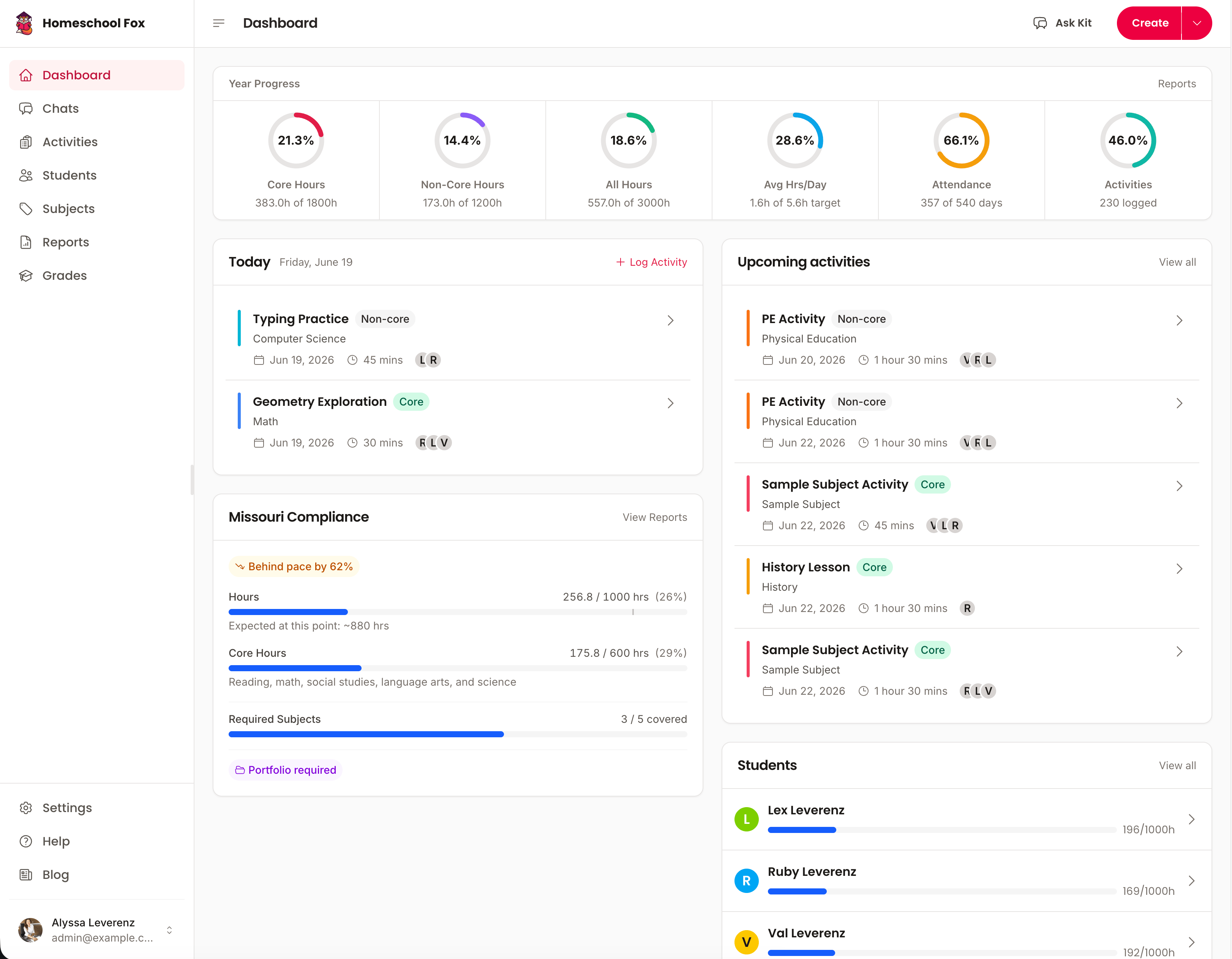
Take your records across the state line
Pick your new state once and Homeschool Fox applies its hours, subjects, and reporting rules to everything you have already logged.
Start tracking free14-day free trial. No credit card required.